Dropdown menu

Tuesday, February 17, 2009

Leading Women Who Wound by Kelley Matthews and Sue Edwards


Leading Women Who Wound by Kelley Mathews and Sue Edwards.

As more churches add women’s ministry programs, there is a growing need to address the issues that naturally arise as women minister alongside one another and to one another. Given the fallen nature of the human heart as well as the complexities of personalities, conflict is an inevitable aspect of ministry. How do women deal with emotions when other women are insensitive, manipulative, or just plain mean? What does the Bible tell us? To be equipped for conflict, women must understand and master strategies specifically related to conflict with other women.

Leading Women Who Wound shows women how to effectively deal with conflict within their ministries. Seasoned women’s ministry leaders themselves, Sue Edwards and Kelley Mathews walk through several different aspects of conflict resolution including self-examination, identification of potential sources of conflict, tools for conflict resolution, and insight on how to prevent and move beyond conflict to minister to those who have been sources of contention. Recognizing that not all conflict results in a happy ending, Leading Women Who Wound gives the tools necessary to minister effectively and move forward with integrity.

About the Authors:

Kelley Mathews
Kelley Mathews is a freelance writer and copy editor. She began her mothering career after earning her Master of Theology
from Dallas Theological Seminary. She and her husband live in Texas with their three children.

Learn more about Kelley at http://www.newdoors.info/.

Sue Edwards
Sue Edwards is assistant professor of Christian Education at Dallas Theological Seminary, where she is leading the development of the Women in Ministry concentration, and has received awards for her excellence in education. She and her husband have two children and four grandchildren.

Learn more about Sue at http://www.newdoors.info/

Leading Women Who Wound
Release: February 1, 2009
Soft cover, 224 pp., $13.99, 8.3 x 5.5 x 0.6 inches
Non-Fiction, Women’s Studies
ISBN: 0802481531


When I first heard about this book, I knew I had to read it. I've been dealing with a conflict with a woman for a while and I've felt powerless to do anything about it. This person has said a lot of hurtful things to me in the name of being helpful and I've had a hard time figuring out how to respond. While I'm not in a position of leadership in my dealings with this person, I thought that by reading this book, I'd be able to learn better methods of dealing with the situation rather than letting it eat me up.

I devoured this book as soon as I got it. I really enjoyed how the authors used story to convey their message. I also thought it helpful how they provided resources for further reading. As I read the book, I found ways I can improve my communication with others. More importantly, I learned that I was not alone in my struggle. I could definitely relate to some of the ways we blame ourselves... was I just a hard person to get along with? Could I just not see all the horrible things I'd done to deserve how this person treats me? I was amazed how much I internalize things and take them personally.

After reading the book, I was able to see that while I don't always respond appropriately to this person, that it isn't about me and what I've done wrong, but about her, and her motivations. I've been praying for a long time that God would help me find a way to love her. I've tried, and I haven't found a way to do it. As I prayed about her last night, one of the things I realized is that she tends to attack me when I appear happy. She is a very unhappy woman. When I read about the dynamics of female relationships and how we have to feel like we're among equals, I wondered if maybe she doesn't view me as her equal. That maybe, even though I've never set myself up as being better than her, she views me as thinking I am, so she uses the opportunities she can find to tear me down. Maybe I'm overanalyzing it. And maybe, because I have never talked to her about it, I'm way off base. But it helped me to be more sympathetic towards her to realize that she is acting from within her own insecurities.

Am I ready to call her up and invite her for coffee? Um, no. I still have my own insecurities, and I'm not sure I'm ready to listen to her negativity. Yep, see right there I'm already using the assumption that it's going to be negative. Which means I still have a long way to go in learning how to deal with conflict. I think we need a book about getting over it and dealing with our own insecurities.

Having read this book and been able to see some of the things in my life I need to deal with, I definitely recommend this book. To anyone who has to deal with a woman. Hmmm... that's just about everyone, I think.

Other bloggers participating in this tour:

A Little Bit of Sunshine
A Little Whine and Cheese
A Peek at My Bookshelf
Aspire2 Blog
Blog Tour Spot
Book Nook Club
Christy’s Book Blog
Destiny Driver
Fictionary
Gatorskunz and Mudcats
Janet Daughtry
Lighthouse Academy
Quiverfullfamily.com
Refresh My Soul
Relevant Blog
Sumballo
The Friendly Book Nook
The Journey of Writer Danica Favorite
They Hang Like Paper Lanterns

Monday, February 16, 2009

Gingham Mountain by Mary Connealy

It is time for a FIRST Wild Card Tour book review! If you wish to join the FIRST blog alliance, just click the button. We are a group of reviewers who tour Christian books. A Wild Card post includes a brief bio of the author and a full chapter from each book toured. The reason it is called a FIRST Wild Card Tour is that you never know if the book will be fiction, non~fiction, for young, or for old...or for somewhere in between! Enjoy your free peek into the book!

You never know when I might play a wild card on you!


Today's Wild Card author is:


and the book:


Gingham Mountain (Lassoed in Texas, Book 3)

Barbour Books (February 1, 2009)


ABOUT THE AUTHOR:


MARY CONNEALY is married to Ivan a farmer, and she is the mother of four beautiful daughters, Joslyn, Wendy, Shelly and Katy. Mary is a GED Instructor by day and an author by night. And there is always a cape involved in her transformation.


Visit the author's website.

Product Details:

List Price: $10.97
Paperback: 288 pages
Publisher: Barbour Books (February 1, 2009)
Language: English
ISBN-10: 1602601410
ISBN-13: 978-1602601413


MY REVIEW: Mary Connealy writes such charming characters you can't help but get caught up in her stories. I had a hard time focusing on all the things I needed to do because I had to read this book. Definitely a better way to spend an afternoon than cleaning house, that's for sure. I met Mary last year through mutual friends and I have to say, she's as delightful as the stories she writes. So take a gander, but be warned. Once you read the first chapter, you won't be able to stop.


AND NOW...THE FIRST CHAPTER:


Sour Springs, Texas, 1870


Martha had an iron rod where most people had a backbone.

Grant smiled as he pulled his team to a stop in front of the train station in Sour Springs, Texas.

She also had a heart of gold—even if the old bat wouldn’t admit it. She was going to be thrilled to see him and scold him the whole time.

“It’s time to get back on the train.” Martha Norris, ever the disciplinarian, had a voice that could back down a starving Texas wildcat, let alone a bunch of orphaned kids. It carried all the way across the street as Grant jumped from his wagon and trotted toward the depot. He’d almost missed them. He could see the worry on Martha’s face.

Wound up tight from rushing to town, Grant knew he was late. But now that he was here, he relaxed. It took all of his willpower not to laugh at Martha, the old softy.

He hurried toward them. If it had only been Martha he would have laughed, but there was nothing funny about the two children with her. They were leftovers.

A little girl, shivering in the biting cold, her thin shoulders hunched against the wind, turned back toward the train. Martha, her shoulders slumped with sadness at what lay ahead for these children, rested one of her competent hands on the child’s back.

Grant noticed the girl limping. That explained why she hadn’t been adopted. No one wanted a handicapped child. As if limping put a child so far outside of normal she didn’t need love and a home. Controlling the slow burn in his gut, Grant saw the engineer top off the train’s water tank. They’d be pulling out of the station in a matter of minutes.

“Isn’t this the last stop, Mrs. Norris?” A blond-headed boy stood, stony-faced, angry, scared.

“Yes, Charlie, it is.”

His new son’s name was Charlie. Grant picked up his pace.

Martha sighed. “We don’t have any more meetings planned.”

“So, we have to go back to New York?” Charlie, shivering and thin but hardy compared to the girl, scowled as he stood on the snow-covered platform, six feet of wood separating the train from the station house.

Grant had never heard such a defeated question.

The little girl’s chin dropped and her shoulders trembled.

What was he thinking? He heard defeat from unwanted children all the time.

Charlie slipped his threadbare coat off his shoulders even though the wind cut like a knife through Grant’s worn-out buckskin jacket.

Grant’s throat threatened to swell shut with tears as he watched that boy sacrifice the bit of warmth he got from that old coat.

Stepping behind Martha, Charlie wrapped his coat around the girl. She shuddered and practically burrowed into the coat as if it held the heat of a fireplace, even as she shook her head and frowned at Charlie.

“Just take the stupid thing.” Charlie glared at the girl.

After studying him a long moment, the little girl, her eyes wide and sad, kept the coat.

Mrs. Norris stayed his hands. “That’s very generous, Charlie, but you can’t go without a coat.”

“I don’t want it. I’m gonna throw it under the train if she don’t take it.” The boy’s voice was sharp and combative. A bad attitude. That could keep a boy from finding a home.

Grant hurried faster across the frozen ruts of Sour Springs Main Street toward the train platform and almost made it. A tight grip on his arm stopped him. Surprised, he turned and saw that irksome woman who’d been hounding him ever since she’d moved to town. What was her name? Grant’d made of point of not paying attention to her. She usually yammered about having his shirts sewn in her shop.

“Grant, it’s so nice to see you.”

It took all his considerable patience to not jerk free. Shirt Lady was unusually tall, slender, and no one could deny she was pretty, but she had a grip like a mule skinner, and Grant was afraid he’d have a fight on his hands to get his arm back.

Grant touched the brim of his battered Stetson with his free hand. “Howdy, Miss. I’m afraid I’m in a hurry today.”

A movement caught his eye, and he turned to look at his wagon across the street. Through the whipping wind he could see little, but Grant was sure someone had come alongside his wagon. He wished it were true so he could palm this persistent pest off on an unsuspecting neighbor.

Shirt Lady’s grip tightened until it almost hurt through his coat. She leaned close, far closer than was proper to Grant’s way of thinking.

“Why don’t you come over to my place and warm yourself before you head back to the ranch. I’ve made pie, and it’s a lonely kind of day.” She fluttered her lashes until Grant worried she’d gotten dirt in her eye. He considered sending her to Doc Morgan for medical care.

The train chugged and reminded Grant he was almost out of time. “Can’t stop now, Miss.” What was her name? How many times had she spoken to him? A dozen if it was three. “There are some orphans left on the platform, and they need a home. I’ve got to see to ’em.”

Something flashed in her eyes for a second before she controlled it. He knew that look. She didn’t like orphans. Well, then what was she doing talking to him? He came with a passel of ’em. Grant shook himself free.

“We’ll talk another time then.”

Sorely afraid they would, Grant tugged on his hat brim again and ran. His boots echoed on the depot stairs. He reached the top step just as Martha turned to the sound of his clomping. She was listening for him even when she shouldn’t be.

Grant couldn’t stand the sight of the boy’s thin shoulders covered only by the coarse fabric of his dirty, brown shirt. He pulled his gloves off, noticing as he did that the tips of his fingers showed through holes in all ten fingers.

“I’ll take ’em, Martha.” How was he supposed to live with himself if he didn’t? Grant’s spurs clinked as he came forward. He realized in his dash to get to town he’d worn his spurs even though he brought the buckboard. Filthy from working the cattle all morning, most of his hair had fallen loose from the thong he used to tie it back. More than likely he smelled like his horse. A razor hadn’t touched his face since last Sunday morning.

Never one to spend money on himself when his young’uns had needs—or might at any time—his coat hung in tatters, and his woolen union suit showed through a rip in his knee.

Martha ran her eyes up and down him and shook her head, suppressing a smile. “Grant, you look a fright.”

A slender young woman rose to her feet from where she sat at the depot. Her movements drew Grant’s eyes away from the forlorn children. From the look of the snow piling up on the young woman’s head, she’d been sitting here in the cold ever since the train had pulled in, which would have been the better part of an hour ago. She must have expected someone to meet her, but no one had.

When she stepped toward him, Grant spared her a longer glance because she was a pretty little thing, even though her dark brown hair hung in bedraggled strings from beneath her black bonnet and twisted into tangled curls around her chin. Her face was so dirty the blue of her eyes shined almost like the heart of a flame in a sooty lantern.

Grant stared at her for a moment. He recognized something in her eyes. If she’d been a child and looked at him with those eyes, he’d have taken her home and raised her.

Then the children drew his attention away from the tired, young lady.

Martha Norris shook her head. “You can’t handle any more, Grant. We’ll find someone, I promise. I won’t quit until I do.”

“I know that’s the honest truth.” Grant knew Martha had to protest; good sense dictated it. But she’d hand the young’uns over. “And God bless you for it. But this is the end of the line for the orphan train. You can’t do anything until you get back to New York. I’m not going to let these children take that ride.”

“Actually, Libby joined us after we’d left New York. It was a little irregular, but it’s obvious the child needs a home.” Martha kept looking at him shaking her head.

“Irregular how?” He tucked his tattered gloves behind his belt buckle.

“She stowed away.” Martha glanced at Libby. “It was the strangest thing. I never go back to the baggage car, but one of the children tore a hole in his pants. My sewing kit is always in the satchel I carry with me. I was sure I had it, but it was nowhere to be found. So I knew I’d most likely left it with my baggage. I went back to fetch it so I could mend the seam and found her hiding in amongst the trunks.”

Grant was reaching for the buttons on his coat, but he froze. “Are you sure she isn’t running away from home?” His stomach twisted when he thought of a couple of his children who had run off over the years. He’d been in a panic until he’d found them. “She might have parents somewhere, worried to death about her.”

“She had a note in her pocket explaining everything. I feel certain she’s an orphan. And I don’t know how long she was back there. She could have been riding with us across several states. I sent telegraphs to every station immediately, and I’m planning on leaving a note at each stop on my way back, but I hold out no hope that a family is searching for her.” Martha sighed as if she wanted to fall asleep on her feet.

Grant realized it wasn’t just the children who had a long ride ahead of them. One corner of Grant’s lips turned up. “Quit looking at me like that, Martha, or I’ll be thinking I have to adopt you so you don’t have to face the trip.”

Martha, fifty if she was a day, laughed. “I ought to take you up on that. You need someone to come out there and take your ranch in hand. Without a wife, who’s going to cook for all these children?”

“You’ve been out. You know how we run things. Everybody chips in.” The snow was getting heavier, and the wind blew a large helping of it down Grant’s neck. Grant ignored the cold in the manner of men who fought the elements for their living and won. He went back to unbuttoning his coat, then shrugged it off and dropped it on the boy’s shoulders. It hung most of the way to the ground.

Charlie tried to give the coat back. “I don’t want your coat, mister.”

Taking a long look at Charlie’s defiant expression, Grant fairly growled. “Keep it.”

Charlie held his gaze for a moment before he looked away. “Thank you.”

Grant gave his Stetson a quick tug to salute the boy’s manners. Snow sprang into the air as the brim of his hat snapped down and up. He watched it be swept up and around by the whipping wind then filter down around his face, becoming part of the blizzard that was getting stronger and meaner every moment.

Martha nodded. “If they limited the number of children one man could take, you’d be over it for sure.”

Grant controlled a shudder of cold as he pulled on his gloves. “Well, thank heavens there’s no limit. The oldest boy and the two older girls are just a year or so away from being out on their own. One of them’s even got a beau. I really need three more to take their places, but I’ll settle for two.”

Martha looked from one exhausted, filthy child to the other then looked back at Grant. “The ride back would be terribly hard on them.”

Grant crouched down in front of the children, sorry for the clink of his spurs which had a harsh sound and might frighten the little girl. Hoping his smile softened his grizzled appearance enough to keep the little girl from running scared, he said, “Well, what kind of man would I be if I stood by watching while something was terribly hard on you two? How’d you like to come out and live on my ranch? I’ve got other kids there, and you’ll fit right in to our family.”

“They’re not going to fit, Grant,” Martha pointed out through chattering teeth. “Your house is overflowing now.”

Grant had to admit she was right. “What difference does it make if we’re a little crowded, Martha? We’ll find room.”

The engineer swung out on the top step of the nearest car, hanging onto a handle in the open door of the huffing locomotive. “All aboard!”

The little girl looked fearfully between the train and Grant.

Looking at the way the little girl clung to Martha’s hand, Grant knew she didn’t want to go off with a strange man almost as much as she didn’t want to get back on that train.

“I’ll go with you.” The little boy narrowed his eyes as he moved to stand like a cranky guardian angel beside the girl.

Grant saw no hesitation in the scowling little boy, only concern for the girl. No fear. No second thoughts. He didn’t even look tired compared to the girl and Martha. He had intelligent blue eyes with the slyness a lot of orphans had. Not every child he’d adopted had made the adjustment without trouble. A lot of them took all of Grant’s prayers and patience. Grant smiled to himself. He had an unlimited supply of prayers, and the prayers helped him hang onto the patience.

Grant shivered under the lash of the blowing snow.

The boy shrugged out of the coat. “Take your coat back. The cold don’t bother me none.”

Grant stood upright and gently tugged the huge garment back around the boy’s neck and began buttoning it. “The cold don’t bother me none, neither. You’ll make a good cowboy, son. We learn to keep going no matter what the weather.” He wished he had another coat because the girl still looked miserable. Truth be told, he wouldn’t have minded one for himself.

Martha leaned close to Grant’s ear on the side away from the children. “Grant, you need to know that Libby hasn’t spoken a word since we found her. There was a note in her pocket that said she’s mute. She’s got a limp, too. It looks to me like she had a badly broken ankle some years ago that didn’t heal right. I’ll understand if you—”

Grant pulled away from Martha’s whispers as his eyebrows slammed together. Martha fell silent and gave him a faintly alarmed look. He tried to calm down before he spoke, matching her whisper. “You’re not going to insult me by suggesting I’d leave a child behind because she has a few problems, are you?”

Martha studied him then her expression relaxed. Once more she whispered, “No Grant. But you did need to be told. The only reason I know her name is because it was on the note. Libby pulled it out of her coat pocket as if she’d done it a thousand times, so chances are this isn’t a new problem, which probably means it’s permanent.”

Grant nodded his head with one taut jerk. “Obliged for the information then. Sorry I got testy.” Grant did his best to make it sound sincere, but it hurt, cut him right to the quick, for Martha to say such a thing to him after all these years.

“No, I’m sorry I doubted you.” Martha rested one hand on his upper arm. “I shouldn’t have, not even for a second.”

Martha eased back and spoke normally again. “We think Libby’s around six.” She swung Libby’s little hand back and forth, giving the girl an encouraging smile.

All Grant’s temper melted away as he looked at the child. “Hello, Libby.” Crouching back down to the little girl’s eye level, he gave the shivering tyke all of his attention.

Too tiny for six and too thin for any age, she had long dark hair caught in a single bedraggled braid and blue eyes awash in fear and wishes. Her nose and cheeks were chapped and red. Her lips trembled. Grant hoped it was from the cold and not from looking at the nasty man who wanted to take her away.

“I think you’ll like living on my ranch. I’ve got the biggest backyard to play in you ever saw. Why, the Rocking C has a mountain rising right up out of the back door. You can collect eggs from the chickens. I’ve got some other kids and they’ll be your brothers and sisters, and we’ve got horses you can ride.”

Libby’s eyes widened with interest, but she never spoke. Well, he’d had ’em shy before.

“I can see you’ll like that. I’ll start giving you riding lessons as soon as the snow lets up.” Grant ran his hand over his grizzled face. “I should have shaved and made myself more presentable for you young’uns. I reckon I’m a scary sight. But the cattle were acting up this morning. There’s a storm coming, and it makes ’em skittish. By the time I could get away, I was afraid I’d miss the train.”

Grant took Libby’s little hand, careful not to move suddenly and frighten her, and rubbed her fingers on his whiskery face.

She snatched her hand away, but she grinned.

The smile transformed Libby’s face. She had eyes that had seen too much and square shoulders that had borne a lifetime of trouble. Grant vowed to himself that he’d devote himself to making her smile.

“I’ll shave it off before I give you your first good night kiss.”

The smile faded, and Libby looked at him with such longing Grant’s heart turned over with a father’s love for his new daughter. She’d gotten to him even faster than they usually did.

Martha reached past Libby to rest her hand on the boy’s shoulder. “And Charlie is eleven.”

Grant pivoted a bit on his toes and looked at Charlie again. A good-looking boy, but so skinny he looked like he’d blow over in a hard wind. Grant could fix that. The boy had flyaway blond hair that needed a wash and a trim. It was the hostility in his eyes that explained why he hadn’t found a home. Grant had seen that look before many times, including in a mirror.

As if he spoke to another man, Grant said, “Charlie, welcome to the family.”

Charlie shrugged as if being adopted meant nothing to him. “Are we supposed to call you pa?”

“That’d be just fine.” Grant looked back at the little girl. “Does that suit you, Libby?”

Libby didn’t take her lonesome eyes off Grant, but she pressed herself against Martha’s leg as if she wanted to disappear into Martha’s long wool coat.

The engineer shouted, “All aboard!” The train whistle sounded. A blast of steam shot across the platform a few feet ahead of them.

Libby jumped and let out a little squeak of surprise. Grant noted that the little girl’s voice worked, so most likely she didn’t talk for reasons of her own, not because of an injury. He wondered if she’d seen something so terrible she couldn’t bear to speak of it.

The boy reached his hand out for Libby. “We’ve been together for a long time, Libby. We can go together to the ranch. I’ll take care of you.”

Libby looked at Charlie as if he were a knight in shining armor. After some hesitation, she released her death grip on Martha and caught Charlie’s hand with both of hers.

“Did I hear you correctly?” A sharp voice asked from over Grant’s shoulder. “Are you allowing this man to adopt these children?”

Startled, Grant stood, turned, and bumped against a soft, cranky woman. He almost knocked her onto her backside—the lady who’d been waiting at the depot. He grabbed her or she’d have fallen on the slippery wood. Grant steadied her, warm and alive in his hands.


Saturday, February 14, 2009

My Man

Since I didn't do anything for him for V Day (didn't remember it was VDay til now, I'm a romance writer, go figure), I'll bite..

1. He's sitting in front of the TV, what is he watching?

Really? Must I admit to this? I'm traumatized. Some sort of Dune buggy race thing. Seriously. Do people really DO this? Obviously they must... but really... must it be on TV? (Okay, we do watch Chuck and CSI together, but everything else he watches is weird man junk that scares me.)

2.You're out to eat; what kind of dressing does he get on his salad?

Vinegar. No oil. Just vinegar.

3. What's one food he doesn't like?

Scallops

4. You go out to eat and have a drink. What does he order?

Cherry Iced Tea. If you're reading it with a strange look, it's iced tea with grenadine.

5.Where did he go to high school?
Kennedy

6. What size shoe does he wear?

7 and trust me, it's really tough to find that in men's.

7. If he was to collect anything, what would it be?

*laughs hysterically* The real question is: what doesn't he collect?

8. What is his favorite type of sandwich?

Roast beef

9. What would this person eat every day if he could?

Dead cow. Lots of dead. Lots of cow. Actually, not so much on the lots of dead. I cook it more than he likes.

10. What is his favorite cereal?

Is it cheating if I ask him? I think it's Captain Crunch, but I'm morally opposed to sugary breakfast cereal, so I don't buy it.

(He was reading over my shoulder and wanted to know why I was laughing so hard. He says his favorite cereal is Frosted Mini Wheats. For the record, in the eleven years of being together, I have never seen him eat Frosted Mini Wheats.)

11. What would he never wear?

A thong.

12. What is his favorite sports team?

The Colorado Comets. Honk if you've heard of them.

13. Who did he vote for?

McCain-Palin

14. Who is his best friend?

Me, but he's also got Luke and Joel.

15. What is something you do that he wishes you wouldn't do?

Nothing because he thinks I'm perfect.

16. What is his heritage?

Slovenian. With a little Mc in there (So I can be Chip MacGregor's Scottish cousin)

17. You bake him a cake for his birthday; what kind of cake?

Cheesecake. (He just told me that after 11 years of knocking myself out to get him cherry, that he prefers plain. Oh, sorry. 10. I apparently missed last year. Yoiks. The things these quizzes do to make a perfectly fine marriage rocky. See why I never do these quiz thingys?)

18. Did he play sports in high school?

Yes. Soccer and Diving. I even have pictures of him in a Speedo to prove it. Not that I'll let anyone see pictures of MY husband in a Speedo. And really, that's gross. I'm traumatized again. Speedos are just a bad idea in general.

19. What could he spend hours doing?

Messing around on the computer, touring historical places.

20. What is one unique talent he has??

That's a secret I'll take to the grave. (He says it's because I can't think of anything. He's right. But that's not really the point, now is it?)

Wednesday, February 11, 2009

Chris Tomlin Concert

It's 4:22 a.m., I have a bad cold, can't sleep, so sorry, I could not come up with a better title. :)

Friday night That Man and I went to see a Chris Tomlin concert here in Denver. We had a great night.

I admit, I was torn between excited, apprehensive, and sad at the whole thing. Excited because I really enjoy Chris's music, and his latest album, Hello Love, is one I particularly enjoy. However, I was apprehensive because one thing I've learned with all the Christian shows I've been to, the bigger the name, the bigger the "show." And I don't mean that in a complementary way. As many of you know, I've been to a number of Todd Agnew concerts. I love him. Love his heart. Love how he isn't afraid to be real on stage. Frankly, he's spoiled me in terms of what my expectations are for a Christian show. I expect to worship. I expect to encounter the Lord. I expect that the person on stage will be full of God and not full of themselves.

Truthfully, I was afraid that I'd go to the Chris Tomlin concert and walk away disappointed that the guy on stage was not the guy singing the songs. There's a number of artists I can't listen to any more because they've come across as too fake when I see them in concert. Chris's music has blessed me so much that I didn't want to have that same creepy feeling in my stomach.

And then, I was sad because it so happened that the same night, Todd had a show in Arizona that a couple of my friends were going to see and they invited me to join them. There was no way I could get the time off work. Plus, I'd already gotten the Tomlin tickets and hubby was semi excited (read: as excited as That Man gets) about going.

So we went.

I was pleasantly surprised at the show. The first thing I noticed was the wide background of folks there. On one side of us sat an upper middle class white couple. On the other side, a group of Asian teens. In front of us was a group of African Americans, and I'm pretty sure they were all from the same church... maybe they all got tickets together or something. Behind us sat a group of older folks. As I scanned the room, I couldn't help but think that Heaven must look something like this. People of all ages, ethnicity, socio-economic standing, and yet, we were all there to worship. How cool is that? I have honestly never seen such a diverse mix of people so well blended.

As far as my fears of Chris appearing fake... um, far from it. He seemed like a down to earth guy who genuinely reveled in not only worshiping the Lord, but in watching the audience worship as well. He didn't talk about how great he was, which is something I really appreciated. Of course, he didn't pull a Todd and start chatting about the Lord (which I LOVE), but I guess there's only one Todd Agnew.

I still missed the easy camaraderie of being at the show with my friends. And yes, I missed the requisite hugs that go with hanging out with my buds at an Agnew show. I definitely missed worshiping with friends who challenge and inspire me on my journey. As I put it to one of my friends, I had a good time, but Tomlin's not family the way my other friends are. But that's okay. A couple of times, I stole a glance at That Man, and he was actually smiling. If you've ever met my expressionless husband, you know that's a miracle.

So we had a good time. I worshiped. I encountered the Lord. And I did not find that the person on stage was too full of himself to be full of God. Today, as I was driving home from WFTJ in a cold induced daze (so sorry for going sick... I had no idea I was that sick until I got home!), one of Chris's songs that he did at the concert came on the radio, and I remembered the blessings of that night. No sick feeling in my stomach. Just the joy of being able to sing with gladness even though my throat burned.

One of the many themes that came up today at WFTJ was how refreshing it is to be among friends who can be real about their lives and their journeys. Even when we feel like putting a wrestling move on someone and body slamming them for annoying us. :) To me, that is such an integral part of worship. Being real, not body slamming people. Although I definitely vote in favor of the body slam... sorry, digressing... cold meds, you know.

The being real thing why I always have, and always will, appreciate the brand of worship Todd Agnew shares. And now, I can add someone else to my list: Chris Tomlin. I probably won't follow him around the country and make it a point to get a few of his shows each year on my calendar, but I will make a point of buying tickets whenever he's in town.

Real worship. Real folks. Love it when I get that taste of heaven.

Sunday, February 08, 2009

Do we really understand?

The other day, I was thinking about God and how merciful He is. And how, no matter how we mess up, He's there. A friend was talking about struggles and how it seems like we end up struggling with the same thing over and over. I couldn't stop thinking about this... why, under the freedom Christ gives us, are we still so burdened?

I've been looking around at the world, at others who say they're Christians, and I wonder...

Do we really get it?

If we really understood who God was, what He did for us, would we still struggle with the things we struggle with?

Earlier this year, my friend Marilynn Griffith gave the challenge of asking God for a word. What's your word for the year? Well, I thought I had a word, and you know what? I don't even remember the word I came up with.

And then it occurred to me, over the past few days, that I had the wrong word. I realized that if I truly understood who God was, what He's done, that half the things that I'm dealing with would be a complete non-issue. I read my Bible, have a relationship with God, but do I really understand who I have a relationship with? Do I really get it?

So my word for the year is understand. I really want to understand who God is.

Wednesday, February 04, 2009

The Rose Conspiracy by Craig Parshall

It is time for a FIRST Wild Card Tour book review! If you wish to join the FIRST blog alliance, just click the button. We are a group of reviewers who tour Christian books. A Wild Card post includes a brief bio of the author and a full chapter from each book toured. The reason it is called a FIRST Wild Card Tour is that you never know if the book will be fiction, non~fiction, for young, or for old...or for somewhere in between! Enjoy your free peek into the book!

You never know when I might play a wild card on you!


Today's Wild Card author is:


and the book:


The Rose Conspiracy

Harvest House Publishers (January 15, 2009)


ABOUT THE AUTHOR:


Craig Parshall is Senior Vice President and General Counsel of the National Religious Broadcasters Association, and the author of six legal–suspense novels: the five books in the Chambers of Justice series, and the stand–alone Trial by Ordeal. He speaks nationally on legal and Christian worldview issues and is a magazine columnist. He has coauthored five books with his wife, Janet, including the historical novels Crown of Fire and Captives and Kings.

Product Details:

List Price: $13.99
Paperback: 368 pages
Publisher: Harvest House Publishers (January 15, 2009)
Language: English
ISBN-10: 0736915141
ISBN-13: 978-0736915144


MY REVIEW

I thought this was an interesting concept. When I first read the summary for the book, I was thinking it would be something along the lines of The DaVinci Code or National Treasure. I like conspiracy/mysteryish stories, so I thought this would be a fun combination of the two. Plus, I thought this would for once be a book both my hubby and I would enjoy. The story was intriguing. Even though it sounds like the above stories, brace yourself for something unlike the two. Yes, there's great conspiracy, great codes, but all is not what it seems. My only frustration with the story is I felt that as the hero gathered clues in his head, we weren't always privy to that information, and I had to re-read the last couple of chapters for some of the pieces to gel. And even though I intially thought this would be a good book for the hubby, I do think that some of the language/vocabulary is a bit advanced for the average reader, so he might be frustrated trying to read it. Hopefully, they'll make this one into a movie too!

AND NOW...THE FIRST CHAPTER:


The driver behind the steering wheel was sweating like a hunter in the dripping heat of the jungle.

But this was a very different kind of jungle.

It was five minutes before midnight, and the car was cruising along the marble-and-monument-studded streets of the Capitol Hill district of Washington DC. The driver was tugging at a collar edge. Drops of perspiration trickled down back and torso, even with the air conditioning on. Maybe it was the freakish heat wave that had hit the city, causing brownouts and power failures across the city. Maybe it was something else…the nasty assignment that had to be taken care of. When the trigger was pulled, and it was all over, the long-missing pages of John Wilkes Booth’s personal diary would then be in the grip of someone else’s hand.

Yet the driver knew what was actually at stake that night. And it really wasn’t about the Booth diary. Or even the assassination of Abraham Lincoln at the hand of a Confederate radical. The note that was about to be seized contained a message with ramifications far beyond any of that.

Sweltering temperatures had suffocated Washington with a relentless haze of humidity that week. Even though it was only June, temperatures were in the low hundreds during the day and in the nineties at night.

The only thing cool to the touch was the white marble of the statues and monuments. The driver steered past the Lincoln Monument and then slowed the car slightly. As usual, interior lights illuminated the massive likeness of Abraham Lincoln in his great marble chair. Once past the monument, the car picked up speed, entered Constitution Avenue, and started heading toward the National Mall. The destination was the Castle, the nineteenth-century red-brick building full of turrets and spires where the administrative headquarters of the Smithsonian Institution were housed.

The driver parked the car a block away and walked quickly to the side entrance of the Castle—then, reaching the door, quickly tapped a code into the security panel. The lock clicked open.

Upstairs, the lights were still on in the office of Horace Langley, Secretary of the Smithsonian Institution. He was working late.

But the object of his work that night was not business as usual.

Only moments before, Langley had opened his safe and pulled out a metal case containing a folder enclosed within a plastic zip bag. Now he was studying the contents—eighteen pages from the diary of John Wilkes Booth. They had been missing for nearly one hundred and fifty years. Their disappearance had occurred suspiciously, about the same time as the federal investigation into the assassination of President Abraham Lincoln was taking place. Booth’s diary had been taken when the assassin was captured and killed. But at the time at least one witness swore that eighteen pages had been removed from it.

That was the point at which those pages seemed to have vanished forever.

Then, a century and a half later, the granddaughter and sole heir of a farmer in central Virginia went rummaging through her grandfather’s attic after his death and happened upon some boxes of old letters and papers. But one sheaf of papers looked different. While much of the writing on them was faded and undecipherable to the layman’s eye, a reference to Abraham Lincoln was visible. In his will, the farmer had given everything to his granddaughter—except the papers. Those, he said, must go to the Smithsonian Institution.

After some wrangling with lawyers, the eighteen pages were transferred to the Smithsonian. Horace Langley had succeeded in keeping the discovery from being leaked to the press, even though he was thoroughly convinced that the pages belonged to the Booth diary.

That June evening, as Langley studied the pages in his office, he knew that some eight hours hence, a council of epigraphers and historians were scheduled to convene and, for the first time, to study the Booth diary entries in that same office.

But he had to get the first look.

He had a pair of white gloves on as he studied the brittle pages, yellowed from age. A pad of paper lay on the desk in front of him, next to his pen. There was a glass of water off to the side.

Langley then began to slowly, painstakingly, write down something on the notepad.

Just a few lines of writing.

He paused to study carefully what he had written.

Then he heard something. He looked up, half-expecting a late-night visitor. “I wasn’t sure I would see you,” was all Horace Langley had a chance to say.

The individual who had entered through the side door below was now standing in front of Langley holding a handgun with a silencer—and proceeded to fire two clean shots directly into the left upper quadrant of Langley’s chest.

The Secretary started to grope upward with his arm, trying to touch the injured area of his chest, but failing. He fell backward into his chair, slumped, and then fell to the floor, where he collapsed on his back, surrounded by an expanding pool of blood.

The shooter stepped over to the desk, picked up the Booth diary pages, placed them back in the plastic zip bag, and put that into a larger bag. The killer snatched the pad of paper, ripped off the top page that had Langley’s writing on it and then another page for good measure, and put them also into the bag. Then the killer placed the pad of paper back on the desk with a clean page exposed as Langley lay dying on the floor, making a final gurgling, gasping sound. Before leaving the room, the shooter paused only for a moment at Langley’s desk, gazing down at the empty drinking glass that was resting there.

Then, exiting quickly through the same side door below where entrance had been made a few minutes before, Langley’s killer made a perfect getaway.

The security guards didn’t notice anything out of the ordinary until twenty-five minutes later, when one of them was making the rounds and stopped to check in on the Secretary. He caught sight of Horace Langley’s feet protruding past the edge of the desk. And the feet in Langley’s dress shoes were absolutely still.

As still as the marble and bronze statues of the famous men that were frozen in time, scattered as monuments across Washington, and that were illuminated by the halogen street lights that buzzed overhead in the suffocating heat of the night.

Tuesday, February 03, 2009

For the Record

I. Am. Exhausted.

It's Tuesday night, and I already have 27 hours in for the tax job this week. And that's JUST the tax job. I'm still writing, still doing my online job, and still trying to do the mom thing.

I'm also really overwhelmed. I know, smart move to be blogging instead of actually doing something about the things overwhelming me. But I'm really at the point of having so much to do that I don't even know where to take the first bite of the elephant called my life.

Today, I went to lunch after WFTJ, which I usually do, but of course, I felt guilty because of all the things I have to do. And then, I said, "too bad!" I need to do nice things for me once and a while, particularly when I'm working more hours than sane people should. Then again, I don't claim to be sane. So there ya go.

So what do you do? When you have so many things to do that you don't know where to even start, you're exhausted, and you have absolutely no room in your schedule?

One thing is for sure... I am going on strike in the cooking department. I tried to be organized. Planned menus for the week so everyone would have dinner. Left a very short to-do list for the fam to help me out. Asked for them to clean out the crock pot. They chose not to. I've decided not to cook until it's done. Is that mean of me?

And that, my friends, is what's going on in my life. Anything exciting in yours?

Sunday, February 01, 2009

The problem with being so busy

Is that I can't remember all the things I've wanted to blog about.

And I'll admit, there's a lot on my heart and mind, and I can't share it in any meaningful way because it's all so jumbled.

I feel like I have way too much to do and way too little time to do it in.

Just a couple more weeks and it'll slow down.

I hope.

Thursday, January 29, 2009

A moment to enjoy...

Over the past few months, we've been dealing with my four year old having really bad eczema. She was referred to a specialist, but they couldn't get her in until today. The specialist walked in, took one look at her, said he knew exactly what was wrong, and promised me a new child within a week. And after his thorough exam and explanation, I believe him.

But that's not the point of my story.

As he examined her, he asked me questions like, "Does she have more behavioral issues than usual?" YES! "Is she grouchy?" YES!

He looked at me and said, "Your daughter is exhausted. She's not getting any sleep because she tosses and turns all night scratching."

Makes sense.

And then he says to me the beautiful words...

"You need to sedate your daughter."

Yes, my friends. FINALLY. Someone who understands my problem. She. Does. Not. Stop. Ever. And this sweet, lovely doctor, looks me in the eye and tells me that the crazy child who drives me nuts really does need to be sedated.

YES!!!

Okay, I know, I should probably not be so excited. But seriously, I never imagined that as the doctor questioned me about my daughter's behavior, and told him about how she drove me nuts, that his answer would be to sedate her. How many times do you wish that were the answer to your problems? And before I get concerned messages or folks sending me to social services, you should know that she's on a very strict medical regimen. And the "sedative" is actually a medication she needs for multiple purposes, and one of the side effects of said medication is that it's a sedative.

However it is such a relief to know that I don't have a horrible child. A lot of the things she's been doing and driving me nuts are, as the doctor put it, because she feels terrible and doesn't have a clue what's going on in her little body. And yes, it is pretty darn funny that part of the solution is to sedate her.

Just let me enjoy my moment.

Sunday, January 25, 2009

Speaking of updates...

I realized my link list on the sidebar is woefully out of date and missing some important blogs. I used to use it to read blogs, and then I discovered the beauty of RSS, so I never check my sidebar anymore.

If you need to be updated/added, you can either leave a comment with your info or email me at dreamen1@hotmail.com.

Thanks!

I won! I won!


My friend Camy, who is the supreme blogger of blogdom, gave me the Premio-Dardas award. Now, I don't really know what Premio-Dardas means, other than it sounds like some kind of disease, but I trust Camy, and I trust that she gave me an award, and not a disease. So when I follow the rules and give you the Premio-Dardas award, I hope you'll trust that it's really a good thing.

Here's what Camy says about the award: "This award 'acknowledges the values that every Blogger displays in their effort to transmit cultural, ethical, literary, and personal values with each message they write.'

Camy here: “Cultural, ethical, literary and personal values”? Um ... well, I get the cultural part, but ethical, literary and personal values? I don’t know if my blog even aspires to such greatness. :P

Awards like this have been created with the intention of promoting community among Bloggers. It's a way to show appreciation and gratitude for work that adds value to the Web.

Danica here: First of all, I would like to thank the Academy, namely Camy Tang, for acknowledging that I add value to the web. It's time someone took notice. ;)

Second, there's a lot of great bloggers out there who add a lot of value to the web, and more importantly, to my life, so this is a fun way to give back.

Which brings me to the rules:

1. Accept the award, post it on your blog together with the name of the person who granted it to you, along with his/her blog link.

2. Pass the award to (15) other blogs that you feel are worthy of this recognition. Remember to contact each of them to let them know they have been chosen as recipients.

*Please note: when copying the award picture, please download it to your own computer first and upload from there to your own blog site.

Soo... since I have a lot of catching up on my own life to do, go visit some of these other fantastic blogs and see all the cool things they bring to the web.

1. Dianne Daniels: She's a cool mom who always inspires me to be a better mom. But not in a "I hate you, I want to kill you," way.

2. Michele Cushatt: Michele is a great inspiration, great butt-kicker, and has a wonderful chronological Bible study on her blog that I mostly attempt to do, but have fallen off the wagon while on vacay.

3. Heather Goodman: I need to point out that she's uber smart. Really makes me think and examine things on a deeper level. She also has a great service called Solomon Summaries that summarizes books for you.

4. Kay Day: With a name like Kay Day, how can you not read her blog? I say her name all the time because it's so cool.

5. Tonya Vander: Not only does she have a lot of great things to say, but her blog is full of her gorgeous pictures.

6. Robbie Iobst: She definitely inspires me.

7. Melanie: She's also a great one... ranges from fun to spiritual, and gives me stuff to think about.

8. Jan Parrish: She redefines being a gramma. Love her!

9. Loretta Oakes: Another uber smart person- she brings the scientific perspective to spirituality. Most of the time, I have no idea what she's talking about, but it ends up making sense and making me think.

10. Margaret Daley: I just love Margaret. It's really impossible not to. She's got such a great and loving heart.

11. Delia: She's another one who has a little bit of everything on her blog, and always ends up blessing others in the process.

12. Gina Conroy: Another one who's got a little bit of everything and manages to inspire in the process. Plus, she is about the funniest gal I know.

13. Jenny B. Jones: She's awesome. Actually, I think she's funnier than Gina, plus she introduced me to Chuck, so she's definitely on the list of folks I'll love forever. You can't read her blog and not laugh.

14. Kelly: She's really encouraging and has a lot of great book posts out there.

15. YOU!! I know, I always do this. But you know, there's a lot of fabulous blogs out there, and just because you don't "make the list" doesn't make yours any less fabulous and any less contributing to the web. So give yourself an award, leave me a comment, and I'll stop by to let you know that you're fabulous too!

Saturday, January 24, 2009

A real update soon I promise!

This vacation thing is killing me... I'm still doing my online jobs, so it seems like when I have time to be online, that's about all I have time for.

Today, we got back from a two day cruise. I have LOTS to say about that, so stay tuned.

Seriously, though, I find that as much as I look forward to going on vacation and having some time off, it always seems to be a thousand times more exhausting than being at home. Although I'll also admit to the fact that I'm not excited about getting home and getting back to work. I have a feeling things have stacked up for me there.

So what's been going on in your world?

Thursday, January 22, 2009

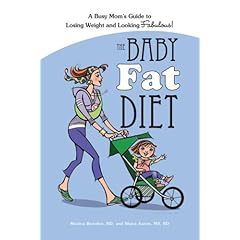
The Baby Fat Diet by Monica Beardon and Shara Aaron


A lot of you probably know of my quest to lose these fifteen pounds... mostly because the doctor's been nagging me. And I will say, after being on vacation visiting my family, a number of whom have health-related weight issues, I'm more motivated than ever to drop those few pounds. Even though fifteen pounds doesn't seem like a huge deal to most people, I know it's what I need to get healthy.

So, when I had the opportunity to read and review this book, I jumped at the chance. Most of my weight is that pesky post pregnancy weight. I want to read and learn whatever I can to get the weight off. Both my doctor and nutritionist friend think that my diet is fine... I just need to exercise more. Still, I think the diet information in here is good and matches a lot of what I have read and been told about good nutrition. For example, the whole eating breakfast thing. Since I'm not a morning person, the thought of waking up earlier to eat breakfast is a foreign concept to me. I barely get up in time to get the kids off to school. But I think they (along with others) make a great argument for eating breakfast, and even though I still don't do it perfectly, I feel like I'm really making progress.

The other thing I really like about this book is that it's some extreme, change your whole life book. It recognizes the fact that I am a busy mom with a busy life. It also reminds me of the right motivation to lose the weight. It's not about wanting to look like a supermodel, but wanting to be healthier for my family. Years ago, we went hiking with my stepkids and my MIL (who passed away a few years ago due to cancer) had a hard time getting up the mountain. She was really overweight and what should have been an easy hike was a huge struggle. My stepson said to me in a not unkind way, "I wish Gramma Pat wasn't so fat. She can't climb the mountain with us."

I don't want to be Gramma Pat. I don't want to miss out on the fun things we like to do as a family because I'm too out of shape to do them. I'm not as overweight as she was, but how much longer will I let myself slide and become that way?

Now for the magic exercise pill... *insert hysterical laughter* Yes, I know... no magic pill... just getting up and doing it. *sigh* Have to stay focused on why I'm doing it...

ABOUT THE BOOK:

Motherhood doesn’t have to mean permanent weight gain!

Get rid of those post-pregnancy pounds— even if your youngest is already in school.


Losing the “baby fat” is one of the hardest things for mothers—even years after they give birth. “Eating for two” often results in gaining too much weight, and the more a woman gains, the harder it is to lose. And after having kids, moms are so busy and distracted it’s necessary for them to learn how to eat in a healthy, self-nurturing way again.

In The Baby Fat Diet, moms will be relieved to learn that small changes can make a big difference. Restrictive dieting and cutting out favorite foods to the extreme isn’t necessary. The book offers simple, easy-to-live-by health and nutrition tips that help women change the behaviors that make losing weight so difficult. The 30 timeless tips throughout are eminently practical and the recipes are delicious. Not only will moms lose weight on The Baby Fat Diet, they’ll feel good about themselves, too. Moms will discover:

•Eating for one again—the importance of portion Sizes
•Why breakfast is a weight-loss ally
•The fast-food solution
•Pairing pleasure with healthy foods
•Exercising to the Wiggles®

About the Authors
Monica Bearden, R.D., has written for the Journal of the American Dietetic Association, the American Journal of Medicine and Sports, Today’s Dietitian, and more. She graduated from the Coordinated Program in Dietetics at the University of Texas at Austin.

Shara Aaron, M.S., R.D., has been a nutrition and health editor for Family Circle, manager of nutrition communications at Masterfoods, USA, owner of a nutrition communications consulting company, and a certified aerobics instructor.

INTERVIEW with the Authors:

Where did you get the idea for the book? What compelled you to write it?
Monica: I have always maintained a private practice and teach a prenatal nutrition class at the Y – throughout my career, most of the women that I help to lose weight, started having weight problems post-pregnancy. It was the same for my friends and family. Throughout the years, we have learned what works and what does not work in terms of moms losing weight. So, we wanted to make the information that we had learned more available. And, since most post-pregnancy weight loss books are exercise-based, Shara and I felt that a nutrition and lifestyle book to help mom’s lose weight was missing from the shelves.

Shara: Monica and I both are moms of young children and recognize the challenges moms face in finding time to focus on themselves, including eating well and exercising. We wanted to write a book that took our experiences and those of women we know and have worked with as dietitians over the years to make a simple, realistic book to help them take off the baby weight. Most importantly it had to be fun to read in short chapters so moms could pick it up, read a few pages and put it down - not to be another chore on her to do list.

What are the major themes of the book?
Monica: Each short chapter is based on an issue faced by moms with a solution – we cover, when you should eat, what you should eat, how you should eat with concrete examples and interesting facts throughout the book. Additionally, we provide menus and shopping lists.

Shara: Simple changes make big differences in taking off the weight and living a healthier life.

Why do you think “baby fat” is so difficult for moms to lose?
Monica: With each child comes a new set of demands and less time, plus the body itself is different and needs attention. By focusing on easy to incorporate healthful strategies that really do make a difference versus trying different diets or following bad advice, moms can actually lose the weight without trying too hard or having to take too much time away from other activities and responsibilities.

Shara: They have little time and energy to focus on themselves. Eating well and exercising go by the wayside.

What kind of research did you have to do for the book?
Monica: The book is based on over 12 years of experience and research with a countless number of women (not to mention our own baby weight loss experiences) – every successful weight loss client as well as our own experiences went into this book. Additionally, all recommendations have a scientific foundation and are validated by scientific research.

Shara: In addition to talking to many women about the challenges they face and the solutions they find realistic, we did much research on the latest studies on each topic to provide scientifically based information that works.

What do you hope readers will take away from your book?
Monica: That to lose weight, one must eat and make good decisions. This book will help them learn how to do both.

Shara: That it’s worth focusing on yourself and your health – to be the best mom you can be you need to take care of yourself by eating well and being active. Small changes make a world of difference so it’s not a huge overhaul but tweaks that can really lead to taking off the baby fat.

MORE INFORMATION:

You can buy the book on Amazon.

For more information about the book and its authors, you can visit their website, which also has a link to their very informative and interesting blog.

Finally, be sure to visit other blogs on the tour:
5 Minutes for Books
A Little Whine and Cheese
A Peek at My Bookshelf
Be Your Best Mom
Behind the Mountain
Blog Tour Spot
Bookish Mom Reviews
Camy’s Loft
Fictionary
Fit Family
i don’t believe in grammar
In God’s Image
In the Dailies
Kells Creative Musings
Lighthouse Academy
Mommy Snacks.Net
Mommy’s Must Haves
Quiverfullfamily.com
Real Women Scrap
Refresh My Soul
Roni’s Weigh
The Journey of Writer Danica Favorite
The Law, Books and Life
The Pitter Patter of Losing Pounds
The Sassy Pear
The Unadorned Book Review
wandering, wonderings of a whacked-out woman

Or the main tour site.

Happy Reading!

Monday, January 19, 2009

The Red Siren by M.L. Tyndall

It is time for a FIRST Wild Card Tour book review! If you wish to join the FIRST blog alliance, just click the button. We are a group of reviewers who tour Christian books. A Wild Card post includes a brief bio of the author and a full chapter from each book toured. The reason it is called a FIRST Wild Card Tour is that you never know if the book will be fiction, non~fiction, for young, or for old...or for somewhere in between! Enjoy your free peek into the book!

You never know when I might play a wild card on you!


Today's Wild Card author is:


and the book:


The Red Siren

Barbour Publishing, Inc (January 2009)


ABOUT THE AUTHOR:


Best-selling author of The Legacy of the King’s Pirates series, MaryLu Tyndall writes full time and makes her home with her husband, six children, and four cats on California’s coast. Her passion is to write page-turning, romantic adventures that not only entertain but expose Christians to their full potential in Christ.

For more information on MaryLu and her upcoming releases, please visit her website.

Product Details:

List Price: $10.97
Paperback: 318 pages
Publisher: Barbour Publishing, Inc (January 2009)
Language: English
ISBN-10: 1602601569
ISBN-13: 978-1602601567


MY REVIEW:
I had the honor of meeting M.L. Tyndall a couple of years ago with the release of her first book at ICRS. She is a lovely lady, and I had so much fun getting to know her. I love her writing, as she takes a captivating time period and brings it to life. I'm not quite finished reading this book, and I'm very frustrated that I'm on vacation right now and left it sitting on my nightstand! So far, I'm loving the book, and I can't wait to get home to finish it. Well, okay, we can leave out the getting home part, but I definitely want to finish the book.

AND NOW...THE FIRST CHAPTER:


But he who received the seed on stony places, this is he who hears the word and immediately receives it with joy; yet he has no root in himself, but endures only for a while. For when tribulation or persecution arises because of the word, immediately he stumbles.

Matthew 13: 20-21

Chapter 1


August 1713, English Channel off Portsmouth, England


This was Dajon Waite’s last chance. If he didn’t sail his father’s merchant ship and the cargo she held safely into harbor, his future would be tossed to the wind. With his head held high, he marched across the deck of the Lady Em and gazed over the choppy seas of the channel, expecting at any minute to see the lights of Portsmouth pierce the gray shroud of dusk. Another hour and his mission would be completed with success. It had taken two years before his father had trusted him to captain the most prized vessel in his merchant fleet, the Lady Em—named after Dajon’s mother, Emily—especially on a journey that had taken him past hostile France and Spain and then far into the pirate-infested waters off the African coast.

Fisting his hands on his hips, Dajon puffed out his chest and drew a deep breath of salty air and musky earth—the smell of home. Returning with a shipload of ivory, gold, and pepper from the Gold Coast, Dajon could almost see the beaming approval on his father’s sea-weathered face. Finally Dajon would prove himself an equal to his older brother, Theodore—obedient, perfect Theodore—who never let his father down. Dajon, however, had been labeled naught but capricious and unruly, the son who possessed neither the courage for command nor the brains for business.

Fog rolled in from the sea, obscuring the sunset into a dull blend of muted colors as it stole the remaining light of what had been a glorious day. Bowing his head, Dajon thanked God for His blessing and protection on the voyage.

“A sail, a sail!” a coarse voice blared from above.

Plucking the spyglass from his belt, Dajon held it to his eye. “Where away, Mules?”

“Directly off our lee, Captain.”

Dajon swerved the glass to the port and adjusted it as Cudney, his first mate, halted beside him.

“She seems to be foundering, Captain,” Mules shouted.

Through the glass, the dark outline of a ship came into focus, the whites of her sails stark against the encroaching night. Gray smoke spiraled up from her quarterdeck as sailors scrambled across her in a frenzy. The British flag flapped a harried plea from her mainmast.

“Hard to larboard,” he yelled aft, lowering the glass. “Head straight for her, Mr. Nelson.”

“Straight for her, sir.”

“Beggin’ your pardon, Captain.” Cudney gave him a sideways glance. “But didn’t your father give explicit orders never to approach an unknown vessel?”

“My father is not the captain of this ship, and I’ll thank you to obey my orders without question.” Dajon stiffened his lips, tired of having his decisions challenged. True, he had failed on two of his father’s prior ventures—one to the West Indies where a hurricane sunk his ship, and the other where he ran aground on the shoals off Portugal. Neither had been his fault. But this time, things would be different. Perhaps his father would even promote Dajon to head overseer of his affairs.

With a nod, Cudney turned. “Mr. Blake, Mr. Gibes, prepare to luff, if you please.” His bellowing voice echoed over the decks, sending the men up the shrouds.

“Who is she?” Cudney held out his hand for the glass.

“A merchant ship, perhaps.” Dajon handed him the telescope then gripped the railing as the Lady Em veered to larboard, sending a spray of seawater over her decks. “But she’s British, and she’s in trouble.”

The ship lumbered over the agitated waves. Dajon watched Cudney as he steadied the glass on his eye and his boots on the sodden deck. He’d been a good first mate and a trusted friend. A low whistle spilled from his mouth as he twisted the glass for a better look.

“Pray tell, Mr. Cudney, what has caught your eye, one of those new ship’s wheels you’ve been coveting?”

“Nay, Captain. But something nearly as beautiful—a lady.”

Dajon snatched the glass back as the Lady Em climbed a rising swell and then tromped down the other side. Sails snapped in the rising wind above him. Bracing his boots on the deck, he focused the glass on the merchant ship. A woman clung to the foremast, terror distorting her lovely features. She raised a delicate hand to her forehead as if she were going to faint. Red curls fluttered in the wind behind her. Heat flooded Dajon despite the chill of the channel. Lowering the glass, he tapped it into the palm of his hand, loathing himself for his shameless reaction. Hadn’t his weakness for the female gender already caused enough pain?

Yet clearly the vessel was in trouble.

“We shall come along side her,” Dajon ordered.

Cudney glared at the ship. “Something is not right. I can feel it in my gut.”

“Nonsense. Where is your chivalry?” Dajon smiled grimly at his friend, ignoring the hair bristling on the back of his own neck.

Cudney’s dark eyes shot to Dajon. “But your father—”

“Enough!” Dajon snapped. “My father did not intend for me to allow a lady to drown. Besides, pirates would not dare sail so close to England—especially to Portsmouth, where so many of His Majesty’s warships are anchored.” Dajon glanced back at the foundering ship, now only half a knot off their bow. Smoke poured from her waist, curling like a snake into the dark sky. Left to burn, the fire would sink her within an hour. “Surely you do not suspect a woman of piracy?”

Cudney cocked one brow. “Begging your pardon, Captain, but I have seen stranger things on these seas.”

***

Faith Louise Westcott flung her red curls behind her and held a quivering hand to her breast, nausea rising in her throat at her idiotic display. How did women feign such weakness without losing the contents of their stomachs?

“They ’ave taken the bait, mistress.” A sinister chuckle filled the breeze.

“Oh, thank heavens.” Faith released the mast. Planting a hand on her hip, she gave Lucas a mischievous grin. “Well, what are you waiting for? Ready the men.”

“Aye, aye.” The bulky first mate winked, and then scuttled across the deck, his bald head gleaming in the light from the lantern hanging on the mainmast.

After checking the pistol stuffed in the sash of her gown and the one strapped to her calf, Faith sauntered to the railing to get a better look at her latest victim, a sleek, two-masted brigantine. The orange, white, and blue of the Dutch flag fluttered from her mizzen. A very nice prize indeed. One that would bring her even closer to winning the private war she waged—a war for the survival of her and her sisters.

The oncoming ship sat low in the water, its hold no doubt packed with valuable cargo. Faith grinned. With this ship and the one she had plundered earlier, loaded with precious spices and silks, she was well on her way to amassing the fortune that would provide for her independence and that of her sisters—at least the two of them that were left unfettered by matrimony.

She allowed her thoughts to drift for a moment to Charity, the oldest. Last year their father had forced her into a union with Lord Villement, a vile, perverse man who had oppressed and mistreated her beyond what a woman should endure. Faith feared for her sister’s safety and prayed for God to deliver Charity, but to no avail.

Then, of course, there was the incident with Hope, their younger sister.

That was when Faith had stopped praying.

She would rather die than see her two younger sisters fettered to abusive men, and the only way to avoid that fate was to shield them with their own fortune. Cringing, she stifled the fury bubbling in her stomach. She mustn’t think of it now. She had a ship to plunder, and this was as much for Charity as it was for any of them.

The bowsprit of the brigantine bowed in obedience to her as it plunged over the white-capped swells. Gazing into the hazy mist, Faith longed to get a peek at the ninnies who had been so easily duped by her ruse but dared not raise the spyglass to her eye. Women didn’t know how to use such contraptions, after all.

Putting on her most flirtatious smile, she waved at her prey, beckoning the fools onward, then she scanned the deck as her crew rushed to their stations. Aboard her ship, she was in control; she was master of her life, her future—here and nowhere else. And oh how she loved it!

Lucas’s large frame appeared beside her. “The rest of the men be waitin’ yer command below hatches, mistress.” He smacked his oversized lips together in a sound Faith had become accustomed to before a battle. Nodding, she scanned her ship. Wilson manned the helm, Grayson and Lambert hovered over the fire, pretending to put it out, and Kane and Mac clambered up the ratlines in a pretense of terror. She spotted Morgan pacing the special perch Faith had nailed into the mainmast just for him. She whistled and the red macaw halted, bobbed his head up and down, and squawked, “Man the guns, man the guns!”

Faith chuckled. She had purchased the bird from a trader off Morocco and named him after Captain Henry Morgan, the greatest pirate of all time. The feisty parrot had been a fine addition to her crew.

Bates, her master gunner, hobbled to her side, wringing his thick hands together in anticipation. “Can I just fire one shot at ’em, Cap’n? The guns grow cold from lack of use.” His expression twisted into a pout that reminded her of Hope, her younger sister. “I won’t hurt ’em none, ye have me word.”

“I cannot take that chance, Bates. You know the rules,” Faith said as the gunner’s soot-blackened face fell in disappointment. “No one gets hurt, or we abandon the prize. But I promise we shall test the guns soon enough.”

With a grunt, Bates wobbled away and disappeared below.

Returning her gaze to her unsuspecting prey, Faith inhaled a breath of the crisp air. Smoke bit her throat and nose, but she stifled a cough as the thrill of her impending victory charged through her, setting every nerve aflame. The merchant ship was nigh upon them. She could already make out the worried expressions upon the crew’s faces as they charged to her rescue.

This is for you, Charity, and for you, Mother.

Heavy fog blanketed the two ships in gray that darkened with each passing minute. Faith tugged her shawl tighter against her body, both to ward off the chill and to hide the pistol in her sash. A vision of her mother’s pale face formed in the fog before her, blood marring the sheets on the birthing bed where she lay.

Take care of your sisters, Faith.

A burst of wind chilled Faith’s moist cheeks. A tear splattered onto the deck by her shoes before she brushed the rest from her face. “I will, Mother. I promise.”

“Ahoy there!” A booming voice shattered her memories.

She raised her hand in greeting toward the brigantine as it heaved ten yards off their starboard beam. “Ahoy, kind sir. Thank God you have arrived in time,” she yelled back, sending the sailors scurrying across the deck. Soon, they lowered a cockboat, filled it with men, and shoved off.

A twinge of guilt poked at Faith’s resolve. These men had come to her aid with kind intentions. She swallowed hard, trying to drown her nagging conscience. They were naught but rich merchants, she told herself, and she, merely a Robin Hood of the seas, taking from the rich to feed the poor. She had exhausted all legal means of acquiring the money she needed, and present society offered her no other choice.

The boat thumped against her hull, and she nodded at Kane and Mac, who had jumped down from the shrouds and tossed the rope ladder over the side.

“Permission to come aboard?” The man who appeared to be the captain shouted toward Lucas as he swung his legs over the bulwarks, but his eyes were upon Faith.

By all means. Faith shoved a floppy fisherman’s hat atop her head, obscuring her features from his view, and smiled sweetly.

***

“Aye, I beg ye, be quick about it afore our ship burns to a cinder,” the massive bald man beckoned to Dajon.

Dajon hesitated. He knew he should obey his father’s instructions, he knew he shouldn’t risk the hoard of goods in his hold, he knew he should pay heed to the foreboding of dread that now sank like a anchor in his stomach, but all he could see was the admiring smile of the red-haired beauty, and he led his men over the bulwarks.

After directing them to assist in putting out the fire, he marched toward the dark, bald man and bowed.

“Captain Dajon Waite at your service.”

When his gaze drifted to the lady, she slunk into the shadows by the foremast, her features lost beneath the cover of her hat. Odd. Somehow he had envisioned a much warmer reception. At the very least, some display of feminine appreciation.

“Give ’em no quarter! Give ’em no quarter!” a shrill voice shrieked, drawing Dajon’s attention behind him to a large red parrot perched on a peg jutting from the mainmast.

A pinprick of fear stabbed him.

“Captain,” one of his crew called from the quarterdeck. “The ship ain’t on fire. It’s just a barrel with flaming rubbish inside it!”

The anchor that had sunk in Dajon’s stomach dropped into his boots with an ominous clank.

He spun back around, hoping for an explanation, but all he received was a sinister grin on the bald man’s mouth.

Tentacles of alarm seized Dajon, sucking away his confidence, his reason, his pride. Surely he could not have been this daft. He glanced back at the Lady Em, bobbing in the sea beside them—the pride of his father’s fleet.

“To battle, men!” The woman roared in a voice belying her gender—a voice that pummeled Dajon’s heart to dust.

Dozens of armed pirates spat from the hatches onto the deck. Brandishing weapons, they hurtled toward his startled crew. One by one, his men dropped their buckets to the wooden planks with hollow thuds and slowly raised their hands. Their anxious gazes shot to Dajon, seeking his command. The pirates chortled. Dajon’s fear exploded into a searing rage. They were surrounded.

The woman drew a pistol from her sash. Dajon could barely make out the tilted lift of her lips. He wiped the sweat from his brow and prayed to God that he would wake up from this nightmare.

“I thank you, Captain, for your chivalrous rescue.” The woman pointed her pistol at him and cocked it with a snap. “But I believe I’ll be taking over your ship.”

Sunday, January 18, 2009

Vacation, Schmacation!

Yes, my friendly readerly friends, I am on vacation. Sitting by the pool at my dad's house in sunny but cold Florida. I cannot believe I planned my vacation for the longest cold spell they've had in a really long time. Oh the horror!!

I've spent months dreaming of the day when I'd sit by the pool, writing and enjoying the fresh air. Not so much. I'm bundled up in my warmest sweatshirt and still cold!

Okay, I just gave up the fight and went inside. My fingers were freezing!

So far, we've done a whole lot of nothing. I guess that's the point of a vacation. Still on the to do list: trip to IKEA, Disney, a visit with my aunt and uncle, and oh yeah, the cruise!! I think we're going to Universal tonight for dinner to celebrate my stepmom's birthday. Hubby and the kids are at... wait for it... really... you're going to die of not surprise... Home Depot.

I know, it's an exciting life I lead... but someone's got to do it.

Thursday, January 15, 2009

The God Question by J.P. Moreland

It is time for a FIRST Wild Card Tour book review! If you wish to join the FIRST blog alliance, just click the button. We are a group of reviewers who tour Christian books. A Wild Card post includes a brief bio of the author and a full chapter from each book toured. The reason it is called a FIRST Wild Card Tour is that you never know if the book will be fiction, non~fiction, for young, or for old...or for somewhere in between! Enjoy your free peek into the book!

You never know when I might play a wild card on you!


Today's Wild Card author is:


and the book:


The God Question

Harvest House Publishers (January 1, 2009)


ABOUT THE AUTHOR:


J.P. Moreland is distinguished professor of philosophy at Talbot School of Theology. His many writings include Kingdom Triangle. Dr. Moreland served ten years with Campus Crusade for Christ, planted two churches, and has spoken on more than 200 college campuses and in hundreds of churches.

Visit the author's website.

Product Details:

List Price: $13.99
Paperback: 272 pages
Publisher: Harvest House Publishers (January 1, 2009)
Language: English
ISBN-10: 0736924884
ISBN-13: 978-0736924887
AND NOW...THE FIRST CHAPTER:


Why Can’t I Be Happy?

In the mid 1980s, hard evidence revealed that something was seriously wrong with the American way of life. Rumors about the problem were prominent since the 1960s, but when the evidence was published, the rumors became public knowledge, though few today know what is going on. And more evidence has piled up in the past 20 years.

Some of the causes and symptoms of the problem shape the way we approach our lives and make it difficult to face this evidence. Not long ago, I was watching reruns of television commercials of the 1950s. In one quite typical ad, a medical doctor encouraged viewers to smoke cigarettes for their health. Smoking, he assured the viewers, calmed nerves, aided one’s appetite, and helped people sleep better. This widely accepted belief hindered Americans from realizing that cigarettes actually harm one’s health. Similarly, the conditions of contemporary life make the evidence mentioned above hard to accept.

And even if someone accepts this evidence, it is very, very difficult to know what to do about the situation. And I say to you with all my heart that you have been hurt by what the evidence shows. No, it’s worse than that. You and your loved ones have been harmed, not merely hurt. In the following pages I have some good and bad news. Let’s start with the bad news. What are the problems and the evidence to which I have been referring? What are the causes and symptoms that have hindered us from facing the evidence and overcoming our dilemma? Let’s look at these in order.

Americans Don’t Know How to Be Happy

The cover story of the December 2006 issue of The Economist was about happiness. The Economist is about as far from a pop psychology magazine as you can imagine, so the topic must have been something of great concern to the editors. Based on research data from 1972 to 2006, the article concluded that people in affluent countries have not become happier as they have grown richer, had more leisure time, and enjoyed more pleasurable activities and a higher standard of living.

In 2005, the results of extensive study on American happiness were released with similar findings: Americans are on average twice as rich, far healthier, more youthful, and safer than they were 50 years ago, but they are not as happy. Since the 1960s the percentage of Americans who say they are “very unhappy” has risen by 20 percent, and depression rates are ten times higher than they were during and before the 1950s. Each year, 15 percent of Americans (approximately 40 million people) suffer from an anxiety disorder.

For decades, University of Pennsylvania psychologist Martin Seligman has been the nation’s leading researcher on happiness. His study released in 1988 sent shock waves around the country. Seligman studied the happiness quotient and depression rate among Americans at that time compared to those of their parents, grandparents, and great-grandparents. Are you ready for this? He discovered that the loss of happiness and the rise of depression were tenfold in the span of one generation—the baby boomers. Something has gone terribly wrong with American culture, said Seligman, and the tenfold, short-term explosive loss of happiness and growth of depression—a factor that has continued to increase since the 1980s—is clearly epidemic. What is going on?

Digging Deeper

Without being harsh, I must say that we would be naive if we didn’t believe this epidemic has affected all of us. There is a way out of this mess, and the chapters that follow are my best offerings for embarking on a journey to a rich, deep, flourishing life. In fact, I would like you to read this book as my invitation to you for such a life—one that is brimming with drama and adventure, flowering with meaning and purpose. However, I am not interested in merely offering you an invitation. I also want to give you wise counsel that has been repeatedly tested and found trustworthy and helpful for the journey.

A journey has to start somewhere, and the best place to start this one is by digging more deeply into the causes and symptoms of our cultural crisis. We are looking for broad cultural factors that have generated a shift in the way we do life, a shift that has caused the epidemic. These factors are not likely to be things we regularly think about. If they were, most people would have made a priority of avoiding them, and that is not the case. I am not suggesting that people will reject the alleged factors once they are made explicit. Quite the opposite. I believe that once they are laid bare, most folks will experience an ah-ha moment and readily identify with them. No, in order to do their destructive work, these factors have to fly under the radar. They must be so pervasive that they are hardly noticed.

In their excellent book on anxiety and depression, psychologist Edmund Bourne and coauthor Lorna Garano identify three causes for the epidemic: (1) the pace of modern life, (2) the loss of a sense of community and deep connectedness with others beyond the superficial, and (3) the emergence of moral relativism. The increased pace of life does not merely refer to more work and less free time, though those are certainly factors. Well into the late Middle Ages, Europeans had 115 holidays a year! Besides free time, the sheer pace and speed at which we live—our language is filled with terms like “rush hour,” “hurry up,” and “fast food”—and the technology we use (including iPods, e-mail, television, and cell phones) make it difficult to be quiet and hear from ourselves. As a result, we feed off of adrenaline, our brain chemistry is not normal, and we are not capable of handling the stress of ordinary contemporary life. Maybe we were never intended to, but I get ahead of myself.

On the surface, the loss of community reflects two things: Western individualism (which is a good thing in moderation) gone mad, and the supposed lack of time required to cultivate deep friendships, especially among contemporary men, who have often been described as “the friendless American males.” On a deeper level, it reflects misplaced priorities due to a shift on our view of the good life. I will say more about this in the next chapter, but for now I simply note that we define success in terms of the accumulation of consumer goods and the social status that they and a culturally respected line of work provide. We seldom measure a successful life by the quality of family and friendship relationships we cultivate.

Regarding the factor of moral relativism, Bourne and Garano make this note:

Norms in modern life are highly pluralistic. There is no shared, consistent, socially-agreed-upon set of values and standards for people to live by…In the vacuum left, most of us attempt to fend for ourselves, and the resultant uncertainty about how to conduct our lives leaves ample room for anxiety. Faced with a barrage of inconsistent worldviews and standards presented by the media, we are left with the responsibility of having to create our own meaning and moral order. When we are unable to find that meaning, many of us are prone to fill the gap that’s left with various forms of escapism and addiction. We tend [to] live out of tune with ourselves and thus find ourselves anxious.

I cannot resist making an observation about their insightful point concerning moral relativism. The damage it does is one reason why the contemporary idea of tolerance is really an immoral, cold, heartless form of indifference to the suffering of others. The classic principle of tolerance is both true and important: We take another group’s views to be wrong and harmful, but we will treat the (alleged) errant people with respect, will defend their right to promote their views, and will engage in respective, civil debate in attempting to persuade them and others to reject their viewpoint. The contemporary idea is grotesque: We are not to say others’ views or behavior is wrong. This is immoral because it allows for genuine evil, such as racism and child molestation. We must judge the behavior to be evil before we can stop it! Bourne and Garano show us that it is also cold and heartless: If you think another is engaged in a lifestyle that is deeply immoral and flawed, the most loving thing to do is to help that person face and get out of that lifestyle. Even if you are wrong in your assessment, at least you cared enough to try to help. By contrast, contemporary tolerance creates indifferent people who don’t have the moral vision or courage to intervene in the lives of others and try to help.

We might summarize Bourne and Garano’s insights this way: First, our resistance to depression and anxiety is weakened by the pace of our lives. Second, we don’t have the relational connection we need for support and strength in finding a way out of unhappiness. And third, we lack the intellectual framework required to admit that there is a right and wrong way to approach life and to fuel the energy we need to seek, find, and live in light of the right approach. In fact, believing that there actually is a right approach seems intolerant to many.

I have spent hours thinking about these three points and how they inform my own journey. If I may say so, it wouldn’t hurt if you set the book down, took out a sheet of paper, jotted down these three factors, and brainstormed about how they have had a negative impact on you or your loved ones. Nevertheless, I do not believe that Bourne and Garano have identified the heart of the matter. We must probe more deeply.

Digging Deeper Still

Psychologist Carl Jung once observed that “neurosis is always a substitute for legitimate suffering.” Jung is referring to our tendency to avoid feeling genuine emotional pain and facing real personal suffering and dysfunction by creating, usually subconsciously, a neurotic pattern of thinking or behaving that allows us to be distracted from our real issues.

When I was attending seminary, my roommate was in constant fear that he had committed the unpardonable sin, an act for which there is no forgiveness. Try as I might, I could not reassure him that he had done no such thing. One day while probing him more deeply, I realized that his real issue was fear of abandonment, loneliness, and feelings of inadequacy due to harsh treatment in his early years by his father. However, it was too painful for him to feel and face these—something he needed to do to get well. Such self-awareness would have been legitimate suffering in Jung’s terms. Instead, he projected his anxiety on something more manageable, on something that distracted his anxiety from the real issues—the unpardonable sin—and neurotically worried about this repeatedly throughout his daily life.

I am convinced that this inability to face our deepest anxieties is at the heart of why we have trouble being happy. In chapter 2, I will expose why this inability is a distinctively contemporary problem for Western culture since the 1960s. For now, I want to mention two forms of “neurosis” characteristic of many of us. Just as my roommate obsessed about the unpardonable sin, we use these two items to manage our anxiety and cope with life while avoiding the deeper issues we have trouble facing. The two items to which I am referring are hurry and worry. When I speak of hurry, I am not simply referring to the (sick) pace at which we live our lives. That’s a problem in its own right. No, I am referring to the role that busyness and being in a hurry plays in coping with our fears in an unhealthy way. People are afraid to slow down and be quiet. As one thinker put it, the hardest thing to get Americans to do today is nothing. We fear solitude, silence, and having nothing to do because we fear what will happen if we aren’t busy. What do we fear? We fear that our anxiety will bubble up. We dread feeling insignificant. We fear hearing from ourselves because we might experience pain if we do. We all have responsibilities in which we invest time and effort. But if you compare our lifestyles with folks in earlier generations, it becomes apparent that our busyness and hurried lives are avoidance strategies.

We all have worries and things that could hurt us. But the degree to which we worry is, again, symptomatic of something much deeper. When I refer to worry as a coping strategy, I am not referring to worry about a threatening situation—losing one’s job, being sick, not getting married, and so on. I am talking about worry as an approach to life. In this sense, worrying is actually a learned behavior. As dear as she was, my mother was a very anxious person who worried about everything. I lived around her and absorbed her approach to life, so by the time I was a young adult, I had learned how to worry from an expert. And now I was the expert!

What roles do hurry and worry play in your life? I encourage you to spend some time pondering this question. As a help to you, I suggest you find some safe friends or family members and ask them to give you honest feedback about this. This issue is so deep and so much a part of the warp and woof of American life that it is hard to get in touch with the way we neurotically use hurry and worry to avoid problems.

One of our main fears is boredom and loneliness, and hurry and worry keep us from facing these fears. In fact, some patterns of ideas and beliefs that permeate the arts, media, and educational institutions of our culture make it all but impossible to face boredom and loneliness. More on that in chapter 2. Here I want you to ponder an additional fact: It takes a lot of emotional energy to “stuff” our real problems and manage appropriate anxiety by the hurry and worry strategy. And given the three pervasive cultural patterns we mentioned earlier—our pace of life, the loss of community, and the emergence of moral relativism—we have a very dangerous situation in our culture.

To live the way many of us do takes a lot of energy, so we are vulnerable to addiction. Various addictions provide some form of relief from a neurotic life and offer some reward on a regular basis in the form of the satisfaction of desire, usually bodily desire. However, all such addictions obey the law of diminishing returns. The more one turns to addictive behavior, the less it pays off and the more one must turn to the addiction. It may be social recognition, sexual stimulation, drugs or alcohol abuse, eating, acquiring consumer goods, and so on. Over time, we shrivel as authentic persons, and we become less and less in touch with our real selves. Instead, we must project a false self to others—a self we wish others to believe about us, a self that is a collage of parental messages, strategies for remaining safe and hidden, and behaviors that avoid shame and guilt. The range of our free will diminishes, and we become enslaved to safety, social rules, and bodily pleasures and their satisfaction.

It’s time to summarize. For at least 40 years, Americans have become increasingly unable to find happiness and, instead, are ten times more likely to be depressed and anxiety filled than Americans of other generations. Clearly, something about our culture is deeply flawed. As a first step toward identifying the flaws, I noted the adrenalized pace of life, the loss of a sense of community, and the emergence of moral relativism in American culture. Digging more deeply, I noted that for these and other reasons, we find it hard to face our real, authentic emotional pain and, instead, opt for lifestyles of hurry and worry that allow us to cope with our boredom, emptiness, and loneliness without having to face our true situation. Such an approach takes a lot of emotional energy and, partly to comfort ourselves, we turn to addictive behaviors that increasingly turn us into false selves who no longer know who we are.

An Invitation and a Word of Concern

I have received much help from others in my own journey, and I believe I have some genuinely good news for you in the pages to follow. I invite you to read on with an open mind and heart. However, I’m concerned about something. I am troubled that you may not be willing to think afresh with me about what follows and won’t benefit from whatever wisdom is offered. Why am I so concerned? It’s because of my topic and the two primary types of people with whom I want to travel.

Beginning with chapter 2, I am going to mention the G word—“God”—more specifically, the Christian God and Jesus of Nazareth. As we will see, whenever we focus on living a rich life and face our inability to be happy, broad questions about the meaning of life inevitably surface. This is as it should be. And lurking in the neighborhood will be questions about God. It has been said that the single most important thing about a person is what comes to mind when he or she hears the word “God.” This is a trustworthy saying.

So why am I concerned? Because it is so very hard to invite someone in this culture to give this topic a fresh hearing, especially from my two audiences. The first person to whom I am writing is not a follower of Jesus. You may be an aggressive atheist, mildly agnostic, or inclined to think that religion should be a private matter and that “Live and let live” should be one’s motto. If you fit this category, you may have picked up this book at a bookstore or found it online, or a friend or relative may have given it to you. If the latter is the case, you may feel defensive about reading the book. You may feel that your friend or relative wants to fix you or to “win” in your longstanding dialogues about Christianity. If you read this book with an open mind and fresh start, and if you come to agree with some of my offerings, you could lose face, as it were. Others could say you were wrong all along and this proves it.

I completely understand such defensiveness, having practiced it myself in various contexts. But to be honest, if you are concerned about such matters, you are actually not being true to yourself. Instead, you are letting others control you. You are giving them free rent in your mind. It’s as though they are looking over your shoulder as you read, just waiting to jump on you if you come to see things as they do. My advice is that you not let others have such power over you. Be yourself. Think for yourself. Give me a hearing, and when you have read the entire book, step back and decide for yourself what you think about these matters.

Besides friends or relatives, if you fit into this first group, I actually have a deeper concern—really, two concerns—about you being defensive in reading what follows. Having talked to atheists and agnostics for 40 years, I’ve seen that many of them don’t want God to exist. In a rare moment of frankness, atheist philosopher Thomas Nagel makes this admission:

I want atheism to be true and am made uneasy by the fact that some of the most intelligent and well-informed people I know are religious believers. It isn’t just that I don’t believe in God and, naturally, I hope that I’m right in my belief. It’s that I hope there is no God! I don’t want there to be a God; I don’t want the universe to be like that.

Such an approach to life is hard to sustain. Influential young atheist Douglas Coupland frankly acknowledges how difficult it is:

Now—here is my secret: I tell it to you with an openness of heart that I doubt I shall ever achieve again, so I pray that you are in a quiet room as you hear these words. My secret is that I need God—that I am sick and can no longer make it alone. I need God to help me give, because I no longer seem capable of giving; to help me be kind, as I no longer seem capable of kindness; to help me love, as I seem beyond being able to love.

Fathers and Freedom

If you are an atheist or something close to it, I believe there may be two reasons why you think this way. I am sharing these with you to be helpful, not to throw this in your face. No one is here but you and me, so please see if these describe you. The first reason you may approach the question of God with anger or rejection is unresolved conflict with your own father figure. I have spoken on more than 200 college campuses and in more than 40 states in the last 40 years, and it has become apparent to me that atheists regularly have deep-seated, unresolved emotional conflicts with their father figures. To think that this plays no role in their atheism would be foolish. Paul Vitz, a leading psychologist in this area claims that, in fact, such conflict is at the very heart of what motivates a person to reject God or be indifferent to religion.

Let’s be honest. You owe it to yourself to see if this is causing you to be defensive about the topic of God. If it is, I urge you in the safety of our conversation to follow, to try to set this aside.

The second reason you may not want the Christian God to be real has been identified by Dinesh D’Souza: People want to be liberated from traditional morality so they can engage in any sexual behavior that satisfies them without guilt, shame, or condemnation. The famous atheist Aldous Huxley made this admission:

I had motives for not wanting the world to have a meaning; consequently I assumed that it had none, and was able without any difficulty to find satisfying reasons for this assumption… For myself, as no doubt for most of my contemporaries, the philosophy of meaninglessness was essentially an instrument of liberation. The liberation we desired was…liberation from a certain system of morality. We objected to the morality because it interfered with our sexual freedom.

If you have a vested interest in wanting to look at pornography or to engage in sexual activity outside of a traditional marriage, your hostility to God may well be a way of enabling yourself to sustain your lifestyle while flying in a no-guilt zone. I take no pleasure in saying this, and I am not trying to be harsh or judgmental toward you. The opposite is the case. I have help for you and will offer it in the chapters to follow. All I ask of you is that you give me a hearing and not allow these factors to fuel your defensiveness in such a way that you are not teachable and open to exploring these issues together.

Caricatures of Christians

My first concern about defensiveness, then, is due to the role that unresolved father issues and sexual practices may play in preventing you from facing this topic honestly and with a good and open heart. My second concern is the associations that come to mind when people in our culture think of conservative Christians, most of whom would be called Evangelicals. You may see red at the very thought of Christians. They are hypocrites, intolerant bigots, nosy members of the Religious Right who try to tell others what to do and how to think. Christians are irrational, unscientific, nonthinking sorts who will gullibly believe anything. Comparing Christians (and other religious zealots) and secularists, University of California at Berkeley professor and former Secretary of Labor Robert Reich gave this warning:

The great conflict of the 21st century will not be between the West and terrorism. Terrorism is a tactic, not a belief. The true battle will be between those who believe in the primacy of the individual and those who believe that human beings owe their allegiance and identity to a higher authority; between those who give priority to life in this world and those who believe that human life is mere preparation for an existence beyond life; between those who believe in science, reason and logic and those who believe that truth is revealed through Scripture and religious dogma. Terrorism will disrupt and destroy lives. But terrorism itself is not the greatest danger we face.

With friends like that, who needs enemies! Reich needs to lighten up a bit. Still, you may share his opinion of what it means to be a Christian. May I suggest two counterarguments that may help you get something out of this book. First, Reich’s statement and the description of Christians in the preceding paragraph are gross caricatures that are far from the truth. It’s a cultural lie that the more educated you become the more you reject Christianity. A few years ago, University of North Carolina sociologist Christian Smith published what may be the most extensive study to date of the impact of contemporary culture on American Evangelicalism. Smith’s extensive research led him to this conclusion:

Self-identified evangelicals have more years of education than fundamentalists, liberals, Roman Catholics, and those who are nonreligious…Of all groups, evangelicals are the least likely to have only a high-school education or less; the nonreligious are the most likely. Furthermore, higher proportions of evangelicals have studied at the graduate-school level than have fundamentalists, liberals, or the nonreligious.

Sure, there are a few bad (ignorant and bigoted) eggs in our basket, but the whole basket should not be judged on this account.

Even if this demeaning picture of Christians contains more than a small grain of truth, becoming a follower of Jesus doesn’t have to make you like this. And there’s still the issue of you and your own life and welfare. You have a life to live, and if you are anything like me, you need all the help you can get to live it well. The real issue is whether the Christian God is real and can be known, whether Jesus of Nazareth was really the very Son of God, and whether the movement He started is what you need and have been looking for (consciously or not). At the end of the day, the issue is not whether Christians are hypocrites, Republicans, or whatever. The issue is Jesus of Nazareth and your life.

Familiarity

The second person to whom I am writing is a Christian who has become too familiar with the form of Christianity often present in our culture. If this is you, you may have become inoculated from the real thing. You are bored with church, you don’t like religious games, and you believe you have given the Christian thing a try and it isn’t what it was cracked up to be. In a way, you’ve lost hope. The fire in your belly has dimmed, and you despair of finding more as a Christian. You think you have already heard and heeded the invitation I am about to unpack, and you are not interested in hearing the same old stuff again. Been there, done that, bought the T-shirt.

Dallas Willard puts his finger on this problem:

The major problem with the invitation now is precisely over-familiarity. Familiarity breeds unfamiliarity—unsuspected unfamiliarity, and then contempt. People think they have heard the invitation. They think they have accepted it—or rejected it. But they have not. The difficulty today is to hear it at all.

I’m asking you to listen again to the invitation as though for the first time. In some cases, that won’t actually be true. You will likely read things in subsequent chapters that you have heard before. If so, I promise to try to give these things new life, to cast them in a new light. In other cases, that may actually be true. Some brand-new insights may follow. If you are a Christian who fits my description, all I can do is to ask you to read on with an open heart.

So let’s move on. You and I have lives to live. How can we get better at it? In chapter 2, we jump out of the pan and into the fire. We move to what I believe is at or near the bottom of why you and many of our fellow Americans can’t find much happiness in life. The central issue revolves around broad cultural ideas about life, reality, and confidence. The fundamental issue involves the mind and how we think about and see things. But before I can tell you that story, I’ll need to let you in on something about your brain.